

Table of Contents
- Understanding EMDR Therapy for Trauma and Addiction Recovery
- The Foundations of EMDR Therapy for Trauma and Addiction
- How EMDR Addresses Trauma and Substance Use Disorders Together
- Integrating EMDR into a Comprehensive Outpatient Addiction Treatment Plan
- Stabilization and Safety in EMDR Therapy for Early Recovery
- Frequently Asked Questions About EMDR Therapy
- Moving Forward with Trauma-Informed Healing at Taylor Care
Understanding EMDR Therapy for Trauma and Addiction Recovery
The potential benefit of using EMDR as a therapy for trauma and addiction could be beneficial because patients can work towards overcoming traumatic events. Through the process of EMDR, which involves eye movements and various kinds of bilateral stimulation, including tapping and sounds, the patients’ brains go about processing these memories. As the brain goes over all the unpleasantness that happened, the traumatic experience would become less upsetting. In its original incarnation, this kind of therapy was used to treat people who suffered from post-traumatic stress disorder, but then later became applied for individuals battling drugs, alcohol, eating disorders, obsessive compulsive disorder (OCD), depression, panic attacks and many others. It later became apparent that addiction might also stem from problems related to trauma. In other words, there may be links between unresolved trauma and substance abuse. The reason why people consume alcohol or take drugs might simply be because they do not want to feel painful recollection from their previous life experiences. If that is the case, then they could only make headway into recovering if we were able to resolve the aforementioned problem. Instead of directly tackling traumatic experiences, what we must attempt here in our therapy work with clients is helping them process such memories without having them being replayed with emotional and physical intensity. EMDR offers more information regarding the underlying theoretical models that help describe how it operates in comparison to the mechanisms of action present when various forms of mental health disorders occur. This also introduces you to some of the procedures that can assist patients in treating their past trauma that can lead to various drug use behaviors as it applies specifically to EMDR therapy and other procedures. The information starts off by talking about the fundamental theory behind what makes this therapy function differently from many forms of similar mental healthcare programs.
The Foundations of EMDR Therapy for Trauma and Addiction
In order for therapy to work on persons who have just started working out their addiction problem, stability must exist.
Understanding the stabilization phase often raises common questions about EMDR therapy.
We can now offer EMDR Therapy for those dealing with Addiction and Trauma and because we are capable of giving clients more flexibility throughout the entire healing journey, this therapy is going to be something available at all times to someone who refers a new trauma client and wants us to get them transported to South Jersey within a 24-hour window.
EMDR operates under the idea that our minds take on different types of storage mechanisms for incoming data. When a trauma happens, most times the event happens too fast so some parts remain frozen in time. It gets trapped there because it doesn’t get to go through with its resolution process inside of us. All of the other related memories like what we were thinking, how we felt, what we saw, heard, smelled and tasted all remain connected to the memory. Until these pieces can all be released together and become one piece instead of separate little stories, the memory remains there. Through EMDR, we help release that memory. By releasing that memory, then we have less of a problem with PTSD or substance use problems.
| Feature | EMDR | CBT (Cognitive Behavioral Therapy) | Prolonged Exposure (PE) | Medication (SSRIs) |
|---|---|---|---|---|
| Core Mechanism | Bilateral stimulation to reprocess traumatic memories. | Cognitive restructuring and behavioral change. | Gradual exposure to trauma cues. | Neurotransmitter regulation. |
| Therapeutic Focus | Unprocessed memories and associated distress. | Maladaptive thoughts and behaviors. | Habituation to trauma reminders. | Symptom reduction. |
| Role in Addiction Treatment | Addresses root trauma that often drives substance use. | Develops coping skills and relapse prevention. | Reduces trauma-related avoidance that can trigger use. | Stabilizes mood to support engagement. |
It also turns out that while our brains contain innate mechanisms to capture everything about our life experiences as they happen, and to make our memories of those experiences serve us well as we face future challenges, studies show that sometimes when bad things happen in our lives, these processes fail. In other words, our brains may retain all of the information pertinent to what happened, yet that information sits dormant, stored separately from the rest of the brain which would otherwise be able to piece it all together. Our clients don’t turn to substances because they want to get drunk or high, but rather because the memories they don’t have or can’t let go of, that weren’t brought in when the trauma happened, cause them pain, anger, confusion and other negative emotions and reactions. Our hope using EMDR is to help them bring up those parts of themselves which were stuck in a traumatic episode and provide the client with skills to work through those bits of memory and thoughts/feelings/images and let his/her brain organize all this into something that makes sense with how he/she sees things now.
How EMDR Addresses Trauma and Substance Use Disorders Together
This process is as follows: taking a patients medical history, outlining course of action, developing a treatment plan; Preconditioning, including a few techniques a patient would use prior to doing the actual desensitization (memory, re-call, EMDR, EMDD). There are three types of procedures using visual movement, or eye movement left-right (or r/l) alternating tap method at hands (alternately tapping on knees, toes), or sound alternately going from ear to ear. This involves utilizing both the opposite hemispheres while recalling a traumatic event There are lots of studies out there that tie together trauma and addiction. People who experience some type of trauma turn to chemicals to medicate themselves out of hyper-arousal state, out of the stream of their intrusive thoughts, or to avoid having to look back on what happened to them. The purpose of EMDR isn’t to teach the client any new coping mechanisms or ways to deal with trauma but instead to help the client learn how to not feel as compelled to go out and get high to escape from these thoughts. When we treat someone with substance use disorder and a co-occuring mental illness, we use this treatment approach. If you have come here with a chemical dependence and are trying to overcome a mental health problem, your dual diagnosis makes recovery a lot harder if you can’t figure out why you began taking drugs in the first place.
EMDR’s Eight-Phase Protocol in Dual Diagnosis Treatment
| EMDR Phase | Key Activities | Addiction Recovery Relevance |
|---|---|---|
| Phase 1: History Taking | Gathering a detailed history and identifying traumatic events and substance-use triggers. | Builds therapeutic alliance and pinpoints trauma–substance links to target in treatment. |
| Phase 2: Preparation | Teaching grounding and stabilization skills and establishing a safe place. | Provides coping strategies to manage distress without substances. |
| Phase 3: Assessment | Selecting target memories, identifying negative cognitions, and measuring distress. | Clarifies core memories that fuel use and sets a baseline for progress. |
| Phase 4: Desensitization | Using bilateral stimulation while reprocessing target memories to reduce distress. | Lowers craving responses tied to traumatic cues as memories lose intensity. |
| Phase 5: Installation | Strengthening adaptive, positive cognitions linked to the memory. | Builds self-efficacy for coping with difficult emotions without substances. |
| Phase 6: Body Scan | Checking for residual somatic tension and processing physical sensations. | Releases body-based stress that can precipitate relapse if unaddressed. |
| Phase 7: Closure | Returning the client to equilibrium and applying calming techniques as needed. | Ensures safe session endings and reinforces self-regulation without substance use. |
| Phase 8: Reevaluation | Reviewing progress and determining whether targets are fully processed. | Monitors stability, identifies remaining triggers, and helps prevent relapse. |
Now that we’ve examined how EMDR works to help rid someone of a traumatic experience, lets move on to talk about how its used for treating traumatised patients who also suffer from a substance abuse disorder.
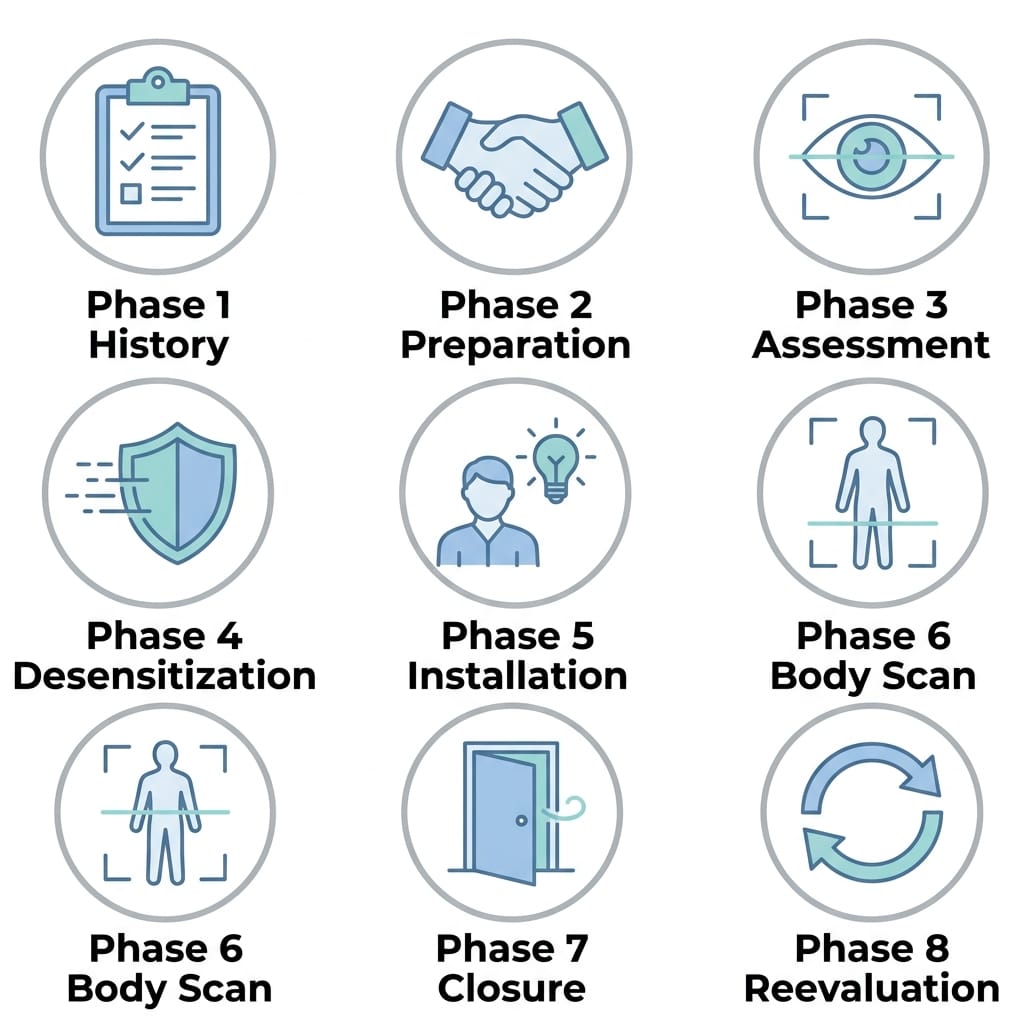
EMDR treatment considers each of those relationships between traumatic experience and addictions issues in light of how the brain works.
Clinical Evidence Supporting EMDR for Co-Occurring Disorders
Though the symptoms of PTSD and SUD differ significantly, both disorders are often characterized physiologically and neurologically. PTSD and SUD occur in part when trauma damages the hypothalamic-pituitary-adrenal axis, which is responsible for initiating and monitoring our arousal level as well as producing hormones that affect us when we encounter threat scenarios. Dysregulation causes our bodies to become excessively aroused in response to perceived threats, the limbic system is therefore easily activated to detect threats while the higher-order logical thinking centers like the prefrontal cortex are unable to regulate our emotions effectively. When PTSD and SUD overlap, our prefrontal cortex, which typically serves as the regulatory center of our brains’ reward systems, may be impaired, and other areas of the brain (particularly the mesolimbic and dorsolateral structures, which initiate behaviors and reinforce positive outcomes and encourage self-destructive behaviors like alcohol abuse), can cause stronger negative associations with thoughts of using. Through this desensitization process of using the dual arm stroking associated with EMDR to decrease the strength of the emotional reaction toward triggering traumatic memories, individuals can begin to emotionally disassociate from painful feelings during recall of painful memories. Once a client is able to accomplish this goal, his/her memory “trigger” responses become less potent and they will not fall back into unhealthy behavior patterns such as substance misuse.
Aligning EMDR with Levels of Outpatient Care
EMDR can be integrated into the treatment program for outpatients with addictions. As such, it will fit the phase of trauma work to the degree of structure and oversight offered in that specific level of treatment. The preparation phase corresponds well with early-stage stability, which focuses on developing coping skills, working through the therapeutic relationship, and laying groundwork that enables patients to deal effectively with emotions when memories emerge during subsequent phases of trauma-focused work.
This table explains what each stage of EMDR treats in terms of co-morbid disorders like trauma and addiction.
While this form is consistent for the treatment process, other types of therapies may be used should the clinician wish them added, and patients work on various goals in each phase of their treatment process. As the patient progresses through their treatment programme, the individual discovers certain behaviors associated with his addiction came from past trauma.
There is increasing interest in combining EMDR with other forms of treatment for those with concurrent issues of substance misuse and traumatic experiences. Some research has suggested that the addition of EMDR to the addiction-treatment program reduced the clients’ signs of trauma and they showed improvement regarding their substance abuse symptoms. Treatment protocols involving trauma focused intervention have been reviewed and some researchers have reported large effect size. Therefore, it might be advisable to include EMDR within multiple treatment modalities to assist traumatized people. Some studies also show that using EMDR therapy on people that are still abusing their drugs is okay as long as the therapist makes sure it doesn’t interfere with their other treatment plans and also does it along with these. Since this research has shown that it won’t do more damage to them, they can be used while the patients have other forms of addiction treatment and therapy for different disorders too. So when we know that this is safe, we can apply it for people having PTSD and substance abuse problems at once since both can go hand-in-hand in any one person’s case.
Building a Safe Therapeutic Space for Processing Trauma
Although there has been some progress in developing methods of addressing co-existing problems such as those related to co-mingling issues involving drugs, alcohol, and trauma, EMDR seems to focus specifically on treating trauma and trauma-related issues that emerge from secondary consequences associated with substance abuse. The development of an intervention designed to treat co-existent issues like this would require an integrated model including the delivery system and integration of EMDR. Although we have successfully tried to integrate other kinds of trauma-focused treatment models, all have helped us feel comfortable about ensuring the safety of persons being treated within the therapy environment. In addition, interventions of this kind need to continue to change according to the varying levels of risk of individuals. For instance, if a person is experiencing greater degrees of illness than another who has achieved a higher level of well-being, the treatment approach needs to be modified accordingly to ensure that the intervention can be delivered without threat of danger to the client.
Stabilization and Safety in EMDR Therapy for Early Recovery
Before going through with EMDR therapy patients must be able to deal with the trauma that they’ve endured. Most often this happens while participating in some sort of treatment program such as a partial hospitalization or intensive outpatient program.
The amount of EMDR treatment relies on the seriousness of the distressing situation, if a person is prepared to manage publicity assignments, if you can find other medical concerns along side PTSD and exactly what the reaction into therapy is always. We are certainly not promising that everybody can receive therapy completed at a specified period, simply because this kind of evaluation occurs throughout the process of therapy itself. It might require many hours getting ready whilst setting up groundwork and handling methods are certainly not stable, specifically if there were a variety of traumas together with big dissociative facets.
Factors considered were the severity and duration of the traumatic exposure; events that occurred following intervention; participation in additional treatments; support available through family, peers. EMDR was incorporated into various aspects of outpatient care including but not limited to: group therapy sessions; individual counselling appointments; administration of psychiatric drugs as appropriate; and case coordination. We thought that if someone could achieve positive changes in one type of therapeutic environment they would benefit from such changes when receiving care elsewhere.
What we look at, if you can tolerate remembering some of those terrible memories from the past, and we look at whether or not there has been any progress. And then how well are patients reacting to this whole process. Based upon all these things, we try and make changes to move more rapidly, or whatever it might be.
Frequently Asked Questions About EMDR Therapy
We need to be conscious about the amount of emotional exposure that occurs at each level when processing the memory. The way we give them this information will impact our job. We slowly start introducing the bilateral stimulations as they can handle it. We always make sure that if there is any sign of dissociation, then they want us to back off or go back to doing some relaxation techniques.
In terms of containment, the client needed some skill set(s), which we taught him before going on to the memory work, such as visualizing his ‘safe space’ at home (and outside of our sessions), keeping distressing material out of sight using the imaginary container idea and not allowing himself to focus on traumatic thoughts unless he was seeing us for therapy. We also talked about the idea of doing ‘grounding activities,’ or things that would bring the client back to the moment rather than focussing on past traumas. This was to be done between times, but we closely supervised the patient throughout the entire process just in case the client started to process trauma. The clinical team had the task of ensuring that the client would not start to work through trauma if we saw that signs of psychosis emerged, if the client wanted to harm themselves, or if drug intoxication got too bad. If any of those occurred, we stopped working through memories immediately and began stabilization work (which included admission to the hospital).
In fact, can EMDR make things worse? During therapy certain clients may report feeling bad for a limited amount of time after processing specific traumatic recollections but we take extra precautionary steps in ensuring that a client feels safe and comfortable with the treatment method they choose. Can EMDR make trauma worse?
During your EMDR session you’ll be asked to recall difficult experiences as you focus on a moving light or alternating sounds. What should I expect during an EMDR session?
Stability needs to exist prior to being able to work through the trauma of what happened to them in the past as they need sufficient resources internally and externally to be able to deal with negative emotions such as anger, despair, fear, but also believe in themselves to not desire to revert back to substance abuse because of this feeling.
Frequently Asked Questions About EMDR Therapy
How many EMDR sessions are typically needed to see progress in trauma and addiction recovery?
We realize this because of the high degree of reactiveness in initial stage recovery, lack of stressor tolerance, as well as co-morbidity and therefore we include the use of EMDR when dealing with trauma and addiction with preconditioning prior to memory processing if necessary. Without sufficient stability to begin memory work, clients would likely be overwhelmed with feelings leading to relapse and also requiring more attention than what is currently available. Therefore, there needs to be a focus on stability of all members before being put into therapy.
Frequently Asked Questions About EMDR Therapy
How many EMDR sessions are typically needed to see progress in trauma and addiction recovery?
The measure will only apply when the individual needs it depending on his circumstances. This implies that the client went through a screening to identify what substances he may have ingested between the moment of the trauma and now, and also has a support system to get any extra assistance should they need it at any point. The plan also includes creating a crisis plan with this support group. In case the client feels like drinking or taking drugs again, there must be another sober therapist or someone from the support team available to talk about it. He might be able to think about what else to do in case he feels tempted when not seeing his therapist, e.g., stop smoking or other things that are related to his addiction, like going out and shopping. He was asked to go through all of his withdrawal signs again in order to make certain that there were no severe health issues which would prevent him from being able to deal with his traumatic experiences.
What is the role of stabilization in EMDR therapy for someone in early addiction recovery?
Yet another strategy is for us to stabilize our clients by working with what they might refer to as “a safe space.” That could look like entering a quiet place in his/her head through any kind of imagery, such as imagining him/herself at his/her grandma’s house or at a garden somewhere he/she feels comfortable. Afterward, we should have done our best to make sure that client was anchored into the here-and-now experience. When we finally decide to start talking to this guy/gal about their traumatic memory, we’ve got to get him/her stable enough to go over their memory and experience it without losing control over emotion. It’s as if we provide ourselves these two tools: One tool is the one that can be utilized if we sense there’s going to be trouble.
Moving Forward with Trauma-Informed Healing at Taylor Care
The stabilization exercises include breath control techniques, focusing on what they feel inside their bodies, being conscious of sensations, or installing a positive thought in advance at the safe place. These exercises can be applied outside the technique “Safe Place”, if there’s no need to go back over the traumatizing event. The objective is that people don’t get out of focus when dealing with their problems nor fall into panic attacks. This increases the effectiveness of subsequent treatments and also reduces the possible side effects.
Start Your Trauma-Informed Recovery
Understanding the stabilization phase often raises common questions about EMDR therapy.
Start Your Trauma-Informed Recovery
EMDR uses bilateral stimulation to help the mind reprocess traumatic memories and reduces their influence on substance abuse as well as addictions. What Is Emdr For Trauma And Addiction?
Start Your Trauma-Informed Recovery
In fact, actually healing deep psychological wounds can make it possible for us to discontinue self-destructive habits and behaviors. Can EMDR work with addictions such as eating disorders and drug addictions?
Start Your Trauma-Informed Recovery
Should there be any doubts regarding your personal case, please ask our medical professional for advice on which types of solution will work best for you.
Start Your Trauma-Informed Recovery
The number of sessions necessary isn’t what determines a session’s success. This depends on the type of trauma, the individual readiness of that person prior to engaging in exposure therapy, whether the individual suffers from another disorder along with PTSD, etc., as well as his response to this kind of therapy. Preparatory work often requires much more than just a few hours. One might have to spend several weeks learning various grounding/containment methods. If the individual suffered multiple traumatic events, preparation might take even longer.
Start Your Trauma-Informed Recovery
Because it can help reduce the level of stress you feel regarding past traumas, and also decrease your urges to take drugs, EMDR will aid you to stop seeking out substances whenever you are confronted with reminders about your trauma. By weakening the link between traumatic recollections and cravings, EMDR can lower the risk that you’ll abuse substances again. Contrary to treatment programs focused solely on dealing with issues, EMDR looks at how your past trauma affects your addiction.
Start Your Trauma-Informed Recovery
There’s another stage though that many people call stabilization or safety. This happens as we prepare them to begin to go through trauma work. The process of becoming grounded, creating a safe space, figuring out how to cope with upset without the need of drugs or alcohol all take place here. People learn how to deal with feelings coming up while dealing with their traumas when we eventually get to the point where we can actually go into them and reprocess.
Start Your Trauma-Informed Recovery
It may also be incorporated into any addiction-related comprehensive outpatient program. It fits within the level of care continuum. The preparation and resourcing phase is the same as what occurs during the stabilization phase for those clients in either partial hospitalization or intensive outpatient levels. Once the client develops enough emotional regulation and coping skills to feel safe engaging in this process, processing can begin.
Start Your Trauma-Informed Recovery
We’ll begin the EMDR Therapy process for trauma and addiction when we receive treatment with Intake in 24 Hours South Jersey, our Continuum of Care, and transport services throughout NJ. Our Referral Portal doesn’t provide emergency services because patients suffering from emergencies should call 9-1-1. Results for treatment may vary depending on the patient. Please talk to your healthcare provider about diagnosis and individual treatment choices. Are you not certain whether your insurance policy would pay for this? Talk to your insurance company! We’re capable to assist you along with some insurance information however ultimately this is determined by you and your policy.
Start Your Trauma-Informed Recovery
When you have learned all about how EMDR performs with regard to dealing with trauma and addiction, you might currently be prepared to start looking into other forms of self-treatment. We give ongoing therapy options in order to support South Jersey people suffering with mental health disorders together with problems of misuse. Our individualized technique ensures your therapy plan meets the demands of simply your requirements as well as circumstances. Our clients could schedule admission within 24 hours following they refer themselves, usually during exactly the same day, which implies there is not going to ever be a requirement to look out for care. Getting started off was simplified via our referral website page. It’s possible to go down the path towards healing yourself of trauma whenever you decide you want to. Please contact us if you would such as to understand more concerning how our own plans may allow you to to heal.