
Table of Contents
- Medication-Assisted Treatment and the Path to Lasting Stability
- How Medication-Assisted Treatment Works in the Brain and Body
- What the Evidence Says About MAT Effectiveness
- Medication-Assisted Treatment Is Not Substituting One Addiction for Another
- The Benefits of Combining Medication-Assisted Treatment With Counseling
- How Long Medication-Assisted Treatment Lasts and How to Access Care in South Jersey
- Taking the First Step Toward Recovery in South Jersey
Medication-Assisted Treatment and the Path to Lasting Stability
Medication-assisted treatment (MAT) combines medicines that are approved for their use to treat specific addictions with counseling and other support. At Taylor Care, located in South Jersey, we have a substance abuse disorder program that consists of medication-assisted therapy as well as individual counseling and group therapy.
MAT is an evidence-based approach that stabilizes brain chemistry, reduces drug cravings, normalizes function in all systems of the body, and does not provide the pleasurable feeling associated with misused drugs. We offer MAT as part of our continuum of care, working on creating coordinated care transitions from one level of care to another to help build a lasting foundation for recovery and wellness. This provides for a combination of medical and psychological treatments, which is one of the major components of a holistic addiction treatment plan.
Key Takeaways
- It’s common that some people question if medication assisted treatment actually works and the answer is, “Yes”.
- “Can’t they just go ‘cold turkey’ instead?” We sometimes hear from concerned families across South Jersey.
- One frequent question asked is: does medication-assisted treatment (MAT) really work?
- Another popular question about MAT is whether it works.
- Deciding to explore treatment is a meaningful step, and a common question people ask is whether medication-assisted treatment works.
How Medication-Assisted Treatment Works in the Brain and Body
MAT works by altering brain chemistry in much the same way drugs like opioids or alcohol can, but does not cause people taking MAT as directed to experience a “high.” By working at specific locations in the brain called receptors, these medications help reset the brain following exposure to substances that have altered normal function through chronic use, by disrupting the natural reward system in the brain.
Chronic substance misuse alters brain chemistry and circuits that help control impulses and reward-seeking behavior. Will power alone does little to help overcome the urges and cravings associated with addiction. When taken as prescribed, MAT medication reduces cravings and withdrawal symptoms caused by substances by gently resetting chemical imbalances within the nervous system. They also blunt the euphoric effects if a relapse occurs, reducing the risk of repeated use. In the body, untreated withdrawal can trigger severe physical stress, driving continued substance use to avoid discomfort. With MAT therapy the patient experiences less extreme symptoms while the body returns to a normal state slowly under the watchful eye of his healthcare team, thus allowing them to more readily participate in regular activities including counseling.
A second misunderstanding about MAT is that it replaces one addiction with another. When taken as prescribed, these medications help people function normally, return to work, and participate in therapy without the compulsive behaviors tied to active addiction. MAT works best when paired with counseling and behavioral support, which address the psychological and social roots of substance use. At Taylor Care, we combine medication with individual counseling, group therapy, and medication monitoring within our Substance Use Disorder Program to support lasting stability. Medication-assisted treatment works by restoring balance to brain chemistry disrupted by prolonged substance use, allowing individuals to focus on rebuilding their lives through therapy and daily routines.
Once people understand what MAT entails, they often wonder about its efficacy in treating addictions for the long term.
What the Evidence Says About MAT Effectiveness
It’s common that some people question if medication assisted treatment actually works and the answer is, “Yes”. Years upon years of study have backed up what we have known since the beginning about how safe and effective medication-assisted treatment can be in treating Opioid Use Disorder. We’ve seen firsthand at our clinic just how much it helps our patients reduce cravings and withdrawal symptoms, allowing them to continue rebuilding their lives without the constant struggle of addiction.
Research consistently shows that MAT is associated with reduced illicit opioid use and a lower risk of overdose compared with attempting to quit without medication. It also improves retention in treatment, helping individuals stay engaged with the support they need to achieve stability. Effectiveness in this context isn’t about a quick fix or a promise of permanent change; it’s about gaining the clarity and stability to participate fully in counseling, rebuild relationships, and return to daily responsibilities like work or school. By addressing the physical aspects of recovery, MAT creates a foundation for long-term progress.
The MAT process works better for patients who also have comprehensive support services like medication monitoring, individual counseling, group therapy, and care-coordination. That combination addresses the whole person — the physical, emotional, and social aspects of recovery — rather than treating addiction in isolation. We’ve designed our services to remove barriers to care, offering transportation and healthy meals so individuals can focus on their treatment without added stress. Our approach ensures that medication is just one part of a broader strategy that supports real, sustainable progress.
Then there’s the myth about “medication = recovery,” a misconception that overlooks how MAT supports real, sustainable progress. At our clinic, we create a place where people feel supported throughout their sobriety journey in a therapeutic, safe space filled with hope and value.
Medication-Assisted Treatment Is Not Substituting One Addiction for Another
“Can’t they just go ‘cold turkey’ instead?” We sometimes hear from concerned families across South Jersey. We hear their skepticism over worries that MAT can only replace one dangerous substance for another. In fact, what people tend to overlook about MAT, and the difference between physical dependence and addiction, is that when used properly and supervised by healthcare practitioners, these drugs can regulate levels of chemicals in the brain, cut off the body’s craving response and assist individuals in recovering, without generating the highs associated with addictive misuse.
The same is true for physical dependence on a variety of prescription medications, such as insulin and anti-depressants, which does not mean abuse. Medications used in medication-assisted treatment such as buprenorphine, methadone, and naltrexone, are given in dosages intended to stabilize their users. These drugs have no euphoric or other ‘high’ that could lead to compulsion, but help people function in their lives, go to work, be safe drivers and participate in therapy, to manage withdrawal symptoms and cravings.
MAT works like treating a chronic illness. Like how insulin helps someone who has type one diabetes live without fear of serious health consequences, MAT enables someone addicted to opioids to return to some semblance of normalcy in their life. The point isn’t to trade one dependency for another, but rather to get people back on track in order to actually help them recover. That’s why MAT lines up with what we know about effective medical treatments and focuses more on healing for the long haul than curing something just temporarily.
I hear this concern often here at the Substance Use Disorder Program, where MAT is one part of a broader continuum of care. We provide individual counseling, group therapy, and psychiatric monitoring alongside medication to address the root causes of substance use. Stabilization through MAT makes it possible for patients to fully participate in these therapies, strengthening their path to recovery.
Unsupervised misuse of opioids in general is not a good idea. But there are fundamental differences between medically-supervised doses and monitoring on one hand, and actual addiction on the other. The decisions related to when to dose, how to taper, etc., are all made in conjunction with a clinician, with the aim of promoting safety and appropriateness for each particular patient.
MAT provides the stable footing from which people can work on their own emotional, cognitive and behavioral issues through individual counseling. With MAT used as part of the overall treatment plan, patients have greater likelihoods of achieving long-lasting recovery at home and in our community.
The Benefits of Combining Medication-Assisted Treatment With Counseling
One frequent question asked is: does medication-assisted treatment (MAT) really work? The answer is yes – however its usefulness is most effective if it’s done in combination with counseling. Meds assist in stabilizing the body as it reduces cravings, eases withdrawal symptoms, which gives them space to think more clearly about engaging in therapy. Counseling, in turn, addresses the psychological and behavioral patterns that drive substance use, helping individuals build coping skills, explore triggers, and develop healthier relationships. Together, MAT and counseling form a comprehensive approach that supports immediate relief as well as long-term recovery.
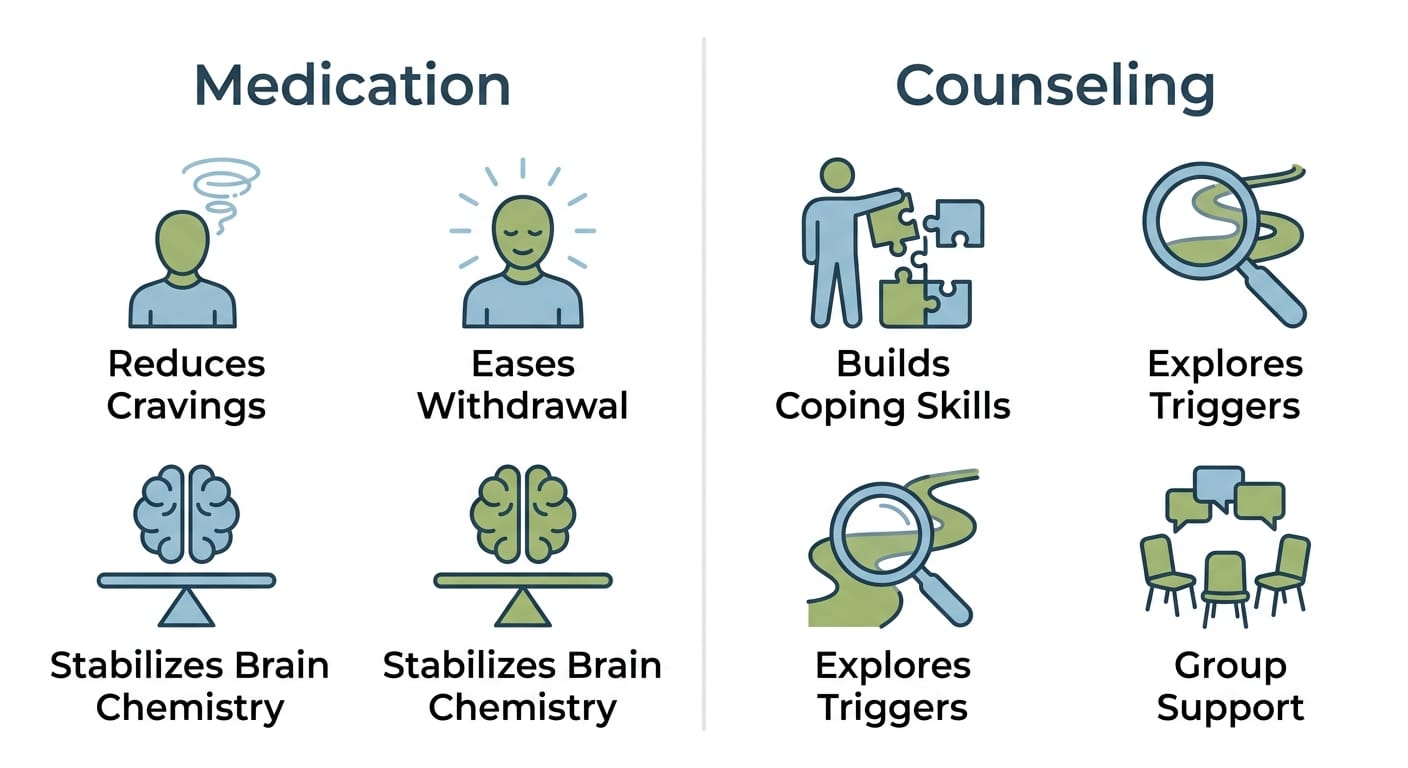
Taylor Care incorporates medications into its treatment plan, along with structured counseling because this method treats all aspects of the individual who has suffered from a drug problem. The drugs help control the physical part of a drug problem, which makes it possible for people suffering with addictions to better focus on their recovery program. Counseling then provides the space to unpack the emotional and social factors that often underlie addiction, whether through individual sessions or group therapy. Providing both kinds of treatment isn’t about replacing one challenge with another; it’s about creating the conditions for sustainable change by treating both the symptoms and the root causes.
This is provided through the services offered at our three South Jersey locations: Tuckerton, Berlin, and Galloway. The Substance Use Disorder Program includes psychiatric evaluation and medication management as well as individual and group therapy sessions to ensure consistency for the patient. Intakes are scheduled within 24 hours of referral reception; if clinically appropriate, we will schedule them on the same day the referral was received, allowing the patient to begin treatment without undue delay.
If you’re considering this combined approach, you may also wonder how long treatment typically lasts and how to get started. We’re here to help you explore the options and find the right path forward.
How Long Medication-Assisted Treatment Lasts and How to Access Care in South Jersey
Another popular question about MAT is whether it works. And the answer is yes — when it’s paired with counseling and ongoing support. At our clinic, our Outpatient Substance Use Disorder Program provides medication-assisted therapy alongside individual counseling, group therapy, and medication monitoring. By doing this, we can help participants become more involved and engaged over time and increase their stability.
The length of treatment isn’t set by a fixed timeline; it’s determined through clinical assessment and your personal progress. Our care team works with you to adjust the duration based on your evolving needs, ensuring you receive the right level of support for as long as it’s beneficial. This individualized approach helps reduce the risk of relapse and builds a stronger foundation for recovery.
Start care quickly. Give us a call at (609) 879-2233 or shoot tuckerton@taylorcare.com to set up an intake within 24 hours after your referral has been received. Same day intakes are done when medically necessary. We serve seven South Jersey counties including Ocean, Burlington, Camden, Gloucester, Atlantic, Cape May and Cumberland. Free transportation to our clinic location will be provided for all three locations Tuckerton, Berlin, Galloway. Medicaid will be accepted. coverage verification is done during the intake process, so don’t worry about any of that.
During the initial evaluation, you’ll have a comprehensive assessment, a discussion of your goals, and a clear plan for your care. We coordinate transitions from higher levels of care and partner with local hospitals to ensure continuity. Finally, you’ll leave with next steps and a schedule tailored to your life and recovery journey.
If you’re going to make that first move, then all that takes is one phone call. We’ll be there to help you get through the assessment process, as well as providing constant support afterwards. Please remember that if you are having an emergency, dial 911 or visit your nearest hospital emergency room — our programs are designed for ongoing recovery, not crisis care.
Frequently Asked Questions About Medication-Assisted Treatment at Taylor Care
How does medication-assisted treatment work to support long-term recovery?
Medication-assisted treatment (MAT) stabilizes brain chemistry disrupted by substance use, reducing cravings and withdrawal symptoms. Taylor Care combines FDA-approved medications with counseling, individual therapy, group therapy, and medication monitoring to support lasting stability and participation in daily life.
Is medication-assisted treatment considered effective for substance use disorders?
Yes, research and clinical experience show MAT is effective for substance use disorders. It reduces illicit opioid use, lowers overdose risk, and improves retention in treatment. Taylor Care’s program combines MAT with counseling and care coordination for comprehensive support.
Does medication-assisted treatment simply substitute one addiction for another?
No. Medications like buprenorphine, methadone, and naltrexone are prescribed in controlled doses to stabilize brain chemistry without producing a high. Taylor Care supervises MAT within a broader treatment plan that includes counseling and therapy to address addiction’s root causes.
How long does a person typically need to stay on medication-assisted treatment?
The duration of MAT is determined by clinical assessment and individual progress. Taylor Care tailors treatment length to each person’s evolving needs, adjusting support to reduce relapse risk and build long-term recovery.
What are the primary benefits of combining medication-assisted treatment with counseling?
Combining MAT with counseling addresses both the physical and psychological aspects of recovery. MAT reduces cravings and withdrawal, while counseling builds coping skills, explores triggers, and supports healthier relationships. Taylor Care integrates both to create a comprehensive treatment approach.
Taking the First Step Toward Recovery in South Jersey
Deciding to explore treatment is a meaningful step, and a common question people ask is whether medication-assisted treatment works. The answer depends on individual circumstances and clinical factors; for many people, it can support recovery when paired with counseling and support. Our team provides Medication Assisted Treatment as part of our outpatient substance use disorder services, alongside individual counseling and group therapy.
First things first. Intake requests will be scheduled within 24 hours of referral receipt, including same-day options when clinically appropriate. Please call us at (609) 879-2233 or come into our Tuckerton location located at 213 W Main St if you would like to start the evaluation process here. If you or a loved one is in crisis, call 9-1-1 immediately; this portal is not for emergencies. Lastly always consult a healthcare professional for personalized advice and verify insurance coverage with your carrier.
Take the First Step Today
You have now seen how medication-assisted treatment works in the brain, what the evidence generally shows, and why it is most effective when paired with counseling and support. The key takeaway is that recovery is not one-size-fits-all — the right plan depends on a comprehensive assessment of your individual circumstances. At our clinic, we offer Medication Assisted Treatment (MAT) as part of our outpatient Substance Use Disorder Program, alongside individual counseling and group therapy. With locations in Tuckerton, Berlin, and Galloway, we serve communities across South Jersey, and intakes are scheduled within 24 hours of referral receipt. Getting started begins with a single phone call to (609) 879-2233, and our team will guide you through the rest of the process. Please remember to verify your insurance coverage with your carrier, and if you are experiencing a medical emergency, call 9-1-1 rather than using our referral portal. Reach out today to learn how our continuum of care in South Jersey can support your next step.